While the retail sector has slowly but surely begun on its post-pandemic recovery despite rising Covid rates, there have been concerns that more needs to be done to curb the spread of the virus as Brits socialise in crowds, often going mask-less in Christmas markets and shopping destinations.
Following yesterday’s news that three cases of the Omicron variant of coronavirus have been detected in the UK, the Prime Minister announced that face coverings are now compulsory in shops from tomorrow (Tuesday November 30).
Speaking at Downing Street on Saturday evening, Boris Johnson said: “On face coverings, what we’re looking at is retail and transport, just going back to a position where you have to wear them in retail settings or on public transport.”
The British Retail Consortium, which represents the retail industry, said it is up to the police to enforce the measure – but should retailers be doing more to protect both their staff and shoppers?
Colm Moran, operations manager business management consultancy firm Over-C said: “The simple fact is that if Covid rates are rising, then of course retailers should be doing all they can to prevent the spread of Covid-19.”
“Retailers need to empower frontline workers to do their job effectively and safely and that is everything from implementing technology solutions to manage footfall and cleaning cycles, to ensuring customers wear masks in store.
“Retailers simply won’t get staff working to their full potential if they are having to constantly worry about the threat of infection,” Colm continued, “so the more they do now to reduce this the better chance they stand of continuing to trade.”
Jace Tyrrell, chief executive at the New West End Company told Retail Gazette that after all the disruption to Christmas last year, it is encouraging to see shoppers returning to the high street and taking advantage of the unique experiences that can only come from in-person shopping.
“Maintaining these measures is vital if we want consumers to continue visiting”
However he stressed that “safety has been an ongoing focus” for the group over the last 20 months and, with the number of customers visiting the area picking up, “it remains a top priority.”
“By continuing to put in place robust measures in our district – including an increased Clean Team, social distancing signage, hand sanitisation points and extensive protective equipment – we have minimised the risks for shoppers,” Tyrell explained.
“Maintaining these measures is vital if we want consumers to continue visiting our world-renowned retailers with confidence over the Christmas period.”
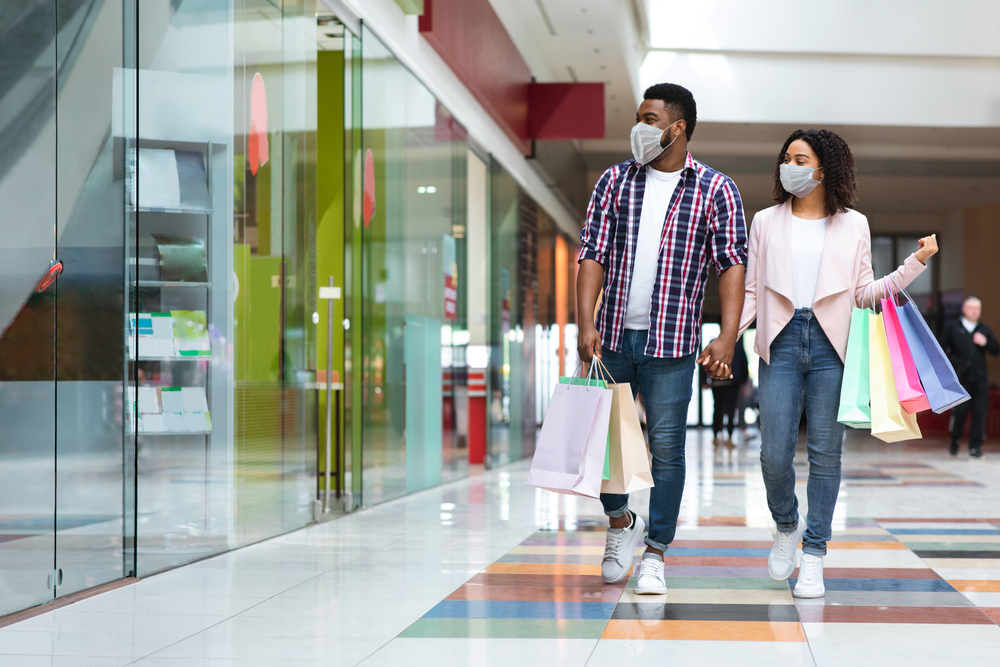
With face coverings soon to be compulsory once again in stores, there are ways that retailers can prioritise safety while also drawing in shoppers over this crucial trading period.
Daniel Graham, director at the retail marketing specialist OnBrand – which works with a number of major shopping outlets across the UK – confirmed they are still “very much still much still prioritising social distancing and Covid safe precautions.”
Graham explained that handwashing facilities and signage is still in operation and events are run outdoors where possible, while keeping numbers manageable.
“Experiences and events now often run over a longer time period,” he added, “so an event like a Father Christmas experience might run over a week rather than on one night to ensure that queues are kept to a minimum and crowds don’t build.”
“Covid safety is still very much a priority”
Kola Tytler, NHS doctor and founder and chief executive of dropout, a business specialising in the sale of limited edition sneakers and streetwear, said that all businesses ought to (at least) adhere to government guidelines when it comes to deciding whether to implement more restrictive policies.
This includes enforcing social distancing, limiting the amount of customers inside the premises or requesting immunity status at entry.
“For practices such as cleaning, wherever possible this should be kept to the highest standard and to a reasonable frequency,” explained Tytler.
“Of course to reduce Covid-19 transmission but also for general hygiene and to ensure that a sense of trust and reliability is instilled into the customer.”
He added that it would be reasonable for businesses in areas or sectors where demographics may be statistically at higher risk (such as the older population) to stick to a more conservative approach and consider implementing limitations such as social distancing.
“This again would possibly serve to show the customers that the business has the health of its employees at its core and is committed to protecting the most vulnerable members of a society who are possibly more at risk.”
While the PM has stated that the measures coming into place this week are temporary and will be reviewed in three weeks time, as we move into 2022 and beyond are there safety measures that retailers should be permanently implementing to reduce risks?
Colm Moran said that many of the digital innovations that we’ve seen retailers bringing in, such as digital checks on cleaning schedules rather than traditional paper-based processes, should be permanently retained.
“The pandemic has been a transformative moment in retail, especially for facilities management teams, and many of those transformations bring extra efficiencies as well as mitigating Covid risks,” he explained.
“In a way, Covid-19 has proved to be an accelerator for more efficient, more sustainable frontline processes in the retail space; there’s no putting the genie back in the bottle now.”
Click here to sign up to Retail Gazette’s free daily email newsletter
The post Why retailers need to prioritise safety this Christmas appeared first on Retail Gazette.
from Retail Gazette https://ift.tt/3D5jt8Q
via IFTTT
Comments
Post a Comment