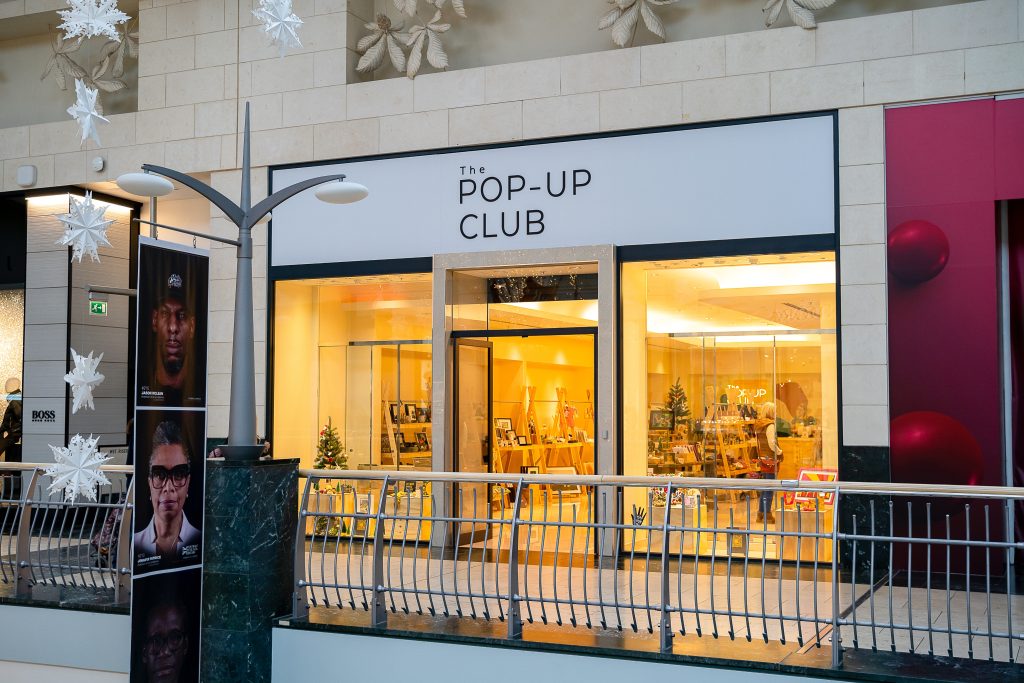
Tillie Peel launched The Pop-Up Club in 2017, after becoming frustrated with the ‘impenetrable’ high street as she sought to promote her own small business.
After the most successful 12 months to-date (which saw The Pop-Up Club generate more than £500,000 for small businesses) Peel spoke to Retail Gazette about the importance of independent retail and how further Covid restrictions could affect the sector.
Tell us a little about The Pop-Up Club – why you launched it and how it helps independent and small retailers?
“The Pop-Up Club was founded in 2017 as we were tired of seeing copy-and-paste high streets and empty shops that were impenetrable for small businesses like ours.
“Joining forces with others meant the high street felt more accessible”
“I wanted to have my own shop but found the high street didn’t have the support for small businesses and I simply couldn’t afford to rent a space on my own. Joining forces with others in the same position meant the high street felt more accessible and having a bricks and mortar presence wasn’t a pipe dream.
“By acting as a collective of small businesses, we remove the risk and make it more affordable for independent, creative and sustainable brands to have a physical platform to showcase their products and grow their business. Each of our pop-up shops or market events works with a diverse mix of up to 50 small and local ventures. This year alone we have worked with nearly 500 individual independent retailers.”
The last year has seen a surge in interest for The Pop-Up Club. Why do you think consumers are embracing the idea of indie retailers now, post-pandemic?
“We’ve had a great year, both in terms of working with leading landlords in prime locations such as Westfield and Bluewater for the first time, as well as seeing a shift in customers seeking local and sustainable alternatives. During the pandemic, we saw a greater sense of community and people making more of a conscious effort to spend money with local businesses to help them survive.
“I also believe people are becoming more aware of the negative environmental and social impact of larger businesses. As a result, shoppers are turning away from the big names and looking for the smaller alternatives where they know their spending can make a difference.”
You have stores in a variety of locations across the UK – how has footfall been affected over the last few weeks?
“We have actually seen an increase in footfall over the last few weeks, which for us, is great to see so many customers come out and safely support our shops.
“In the run up to Christmas, we’ve been busy in all of our locations and we’re hopeful that 2022 will be another busy and positive year for us.”
What do you believe the impacts of another lockdown or further Covid restrictions could mean for retailers?
“While the latest restrictions have not impacted us, I think a lockdown or tighter restrictions would be detrimental for retailers, especially independents without any government support.
“Many landlords had previously shared the pain in terms of writing off or delaying rent, however, I don’t think we’ll see the same support this time meaning expensive overheads and loss of income could see the loss of many more businesses.”
How would The Pop-Up Club be affected if there were further restrictions?
“Thankfully we will not be greatly affected as we plan to close the majority of our pop-up shops on Christmas Eve, in line with our short-term rentals. However, the looming restrictions has made us reconsider the possibility of extensions and may delay the opening of new shops going into 2022.
“A lockdown or tighter restrictions would be detrimental for retailers”
“We will be running a campaign to urge customers to continue their support of small businesses however they can. We still remain hopeful that the support we’ve seen for The Pop-Up Club and the independent retailers it supports will continue in 2022.”
It has just been announced that hospitality and leisure businesses will be able to claim grants to help with the loss of trade – should retail be offered the same assistance?
“The hospitality and leisure absolutely needs these grants after what has been such a challenging year for them. Retailers have also suffered a great loss and I believe such assistance should be offered to retailers, especially independents, who don’t necessarily have access to large reserves or investment.
“We hoped Rishi would help sort out business rates in September and make them more realistic for businesses on high streets. He did reference small businesses and those in retail but all the figures are all completely outdated and need to be revised properly to help small businesses into units on our high streets.
“So many have had to close this year already especially once rates started back in July, as they cripple small businesses.”
What do you hope / predict we will at retail see as we move into 2022?
“I think we’ll see our retail model and the pop-up concept being used more, and I think people will work collaboratively and share the risk in spaces. I also think landlords will start to see more value in pop-ups for their investment properties, and we hope that means more support for smaller and more independent businesses.
“I’d like to start to see retail go back to how it was many years ago, such as a shoemaker for shoes, a bakery for bread – instead of having it all in one great big shop outside of town (where places typically benefit from lower business rates).
“That sense of local community is essential for powering the local economy and keeping the high street thriving.”
Click here to sign up to Retail Gazette’s free daily email newsletter
The post The Pop-Up Club: “We were tired of seeing copy-and-paste high streets and empty shops” appeared first on Retail Gazette.
from Retail Gazette https://ift.tt/3yRJqbA
via IFTTT
Comments
Post a Comment